
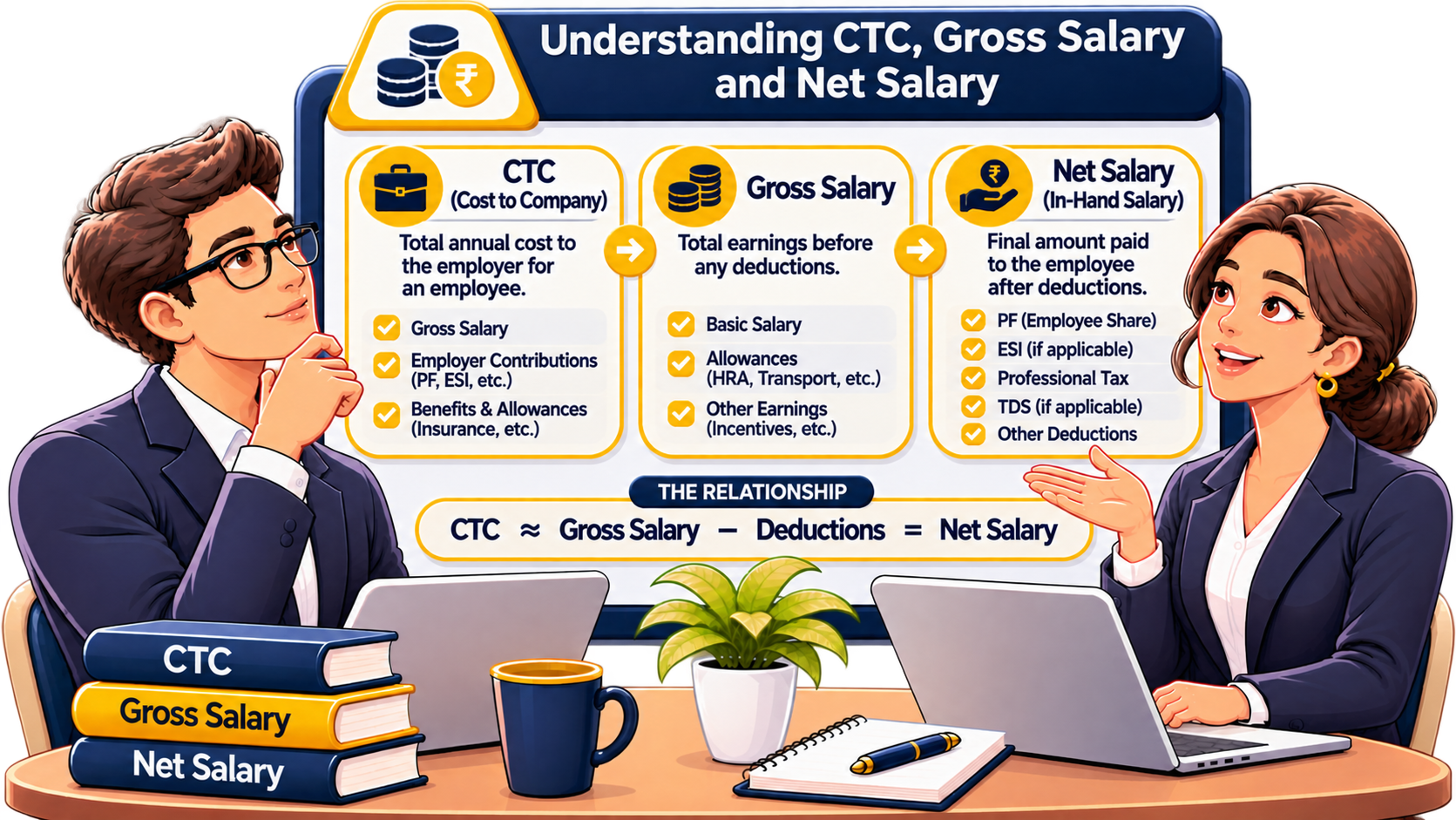
Understand the difference between an employer’s overall cost, an employee’s gross earnings and the amount paid after deductions.
Cost to Company (CTC)
CTC is commonly used to describe the employer’s annualized cost of employing a person. Depending on the salary structure, it may include fixed pay, variable pay, employer contributions, benefits and other costs. The components should be clearly itemized in the offer or compensation statement.
Gross salary
Gross salary generally refers to earnings before employee-side deductions. The exact components and treatment depend on the agreed structure and applicable rules. Not every CTC component is paid as monthly cash salary.
Net or take-home salary
Take-home pay is the amount remaining after applicable employee deductions and adjustments. These may include provident fund, professional tax, tax withholding or other authorized deductions, depending on the employee and location.
Read the structure carefully
Compare annual and monthly figures, variable-pay conditions, employer contributions and deductions separately. Use the employer’s documented calculation and consult a qualified payroll or tax professional for individual treatment.
This article is general information, not legal, tax or professional advice. Requirements can vary by organization, location and current law. Verify applicable requirements with authoritative sources and qualified advisors before acting.