
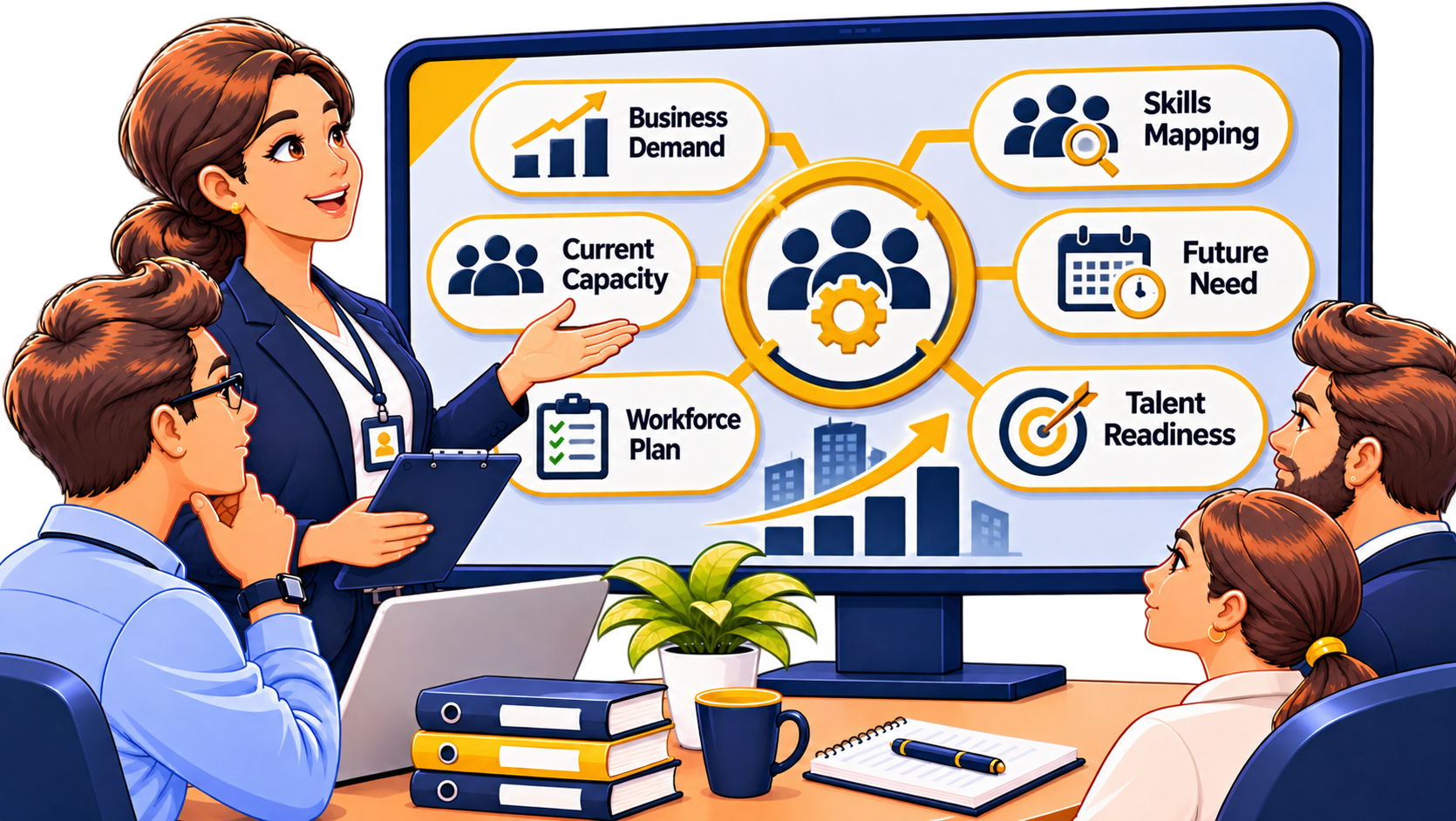
Practical ways to match workforce capacity and skills with changing business demand.
Understand current capacity
Map roles, skills, locations, reporting lines, workload and critical dependencies. Identify where capacity is underused, constrained or concentrated in a small number of people.
Forecast future requirements
Use sales plans, project pipelines, seasonality, attrition and technology changes to estimate future workforce demand. Make assumptions visible and prepare more than one scenario where uncertainty is high.
Choose the right response
Possible responses include redeployment, training, process redesign, permanent hiring, temporary staffing or external specialist support. Compare lead times, total costs and operational risks before committing.
Refresh the plan
Review workforce assumptions with managers at an agreed cadence. Track vacancies, overtime, capability gaps, employee movement and delivery outcomes so the plan remains useful rather than becoming a static spreadsheet.
This article is general information, not legal, tax or professional advice. Requirements can vary by organization, location and current law. Verify applicable requirements with authoritative sources and qualified advisors before acting.