
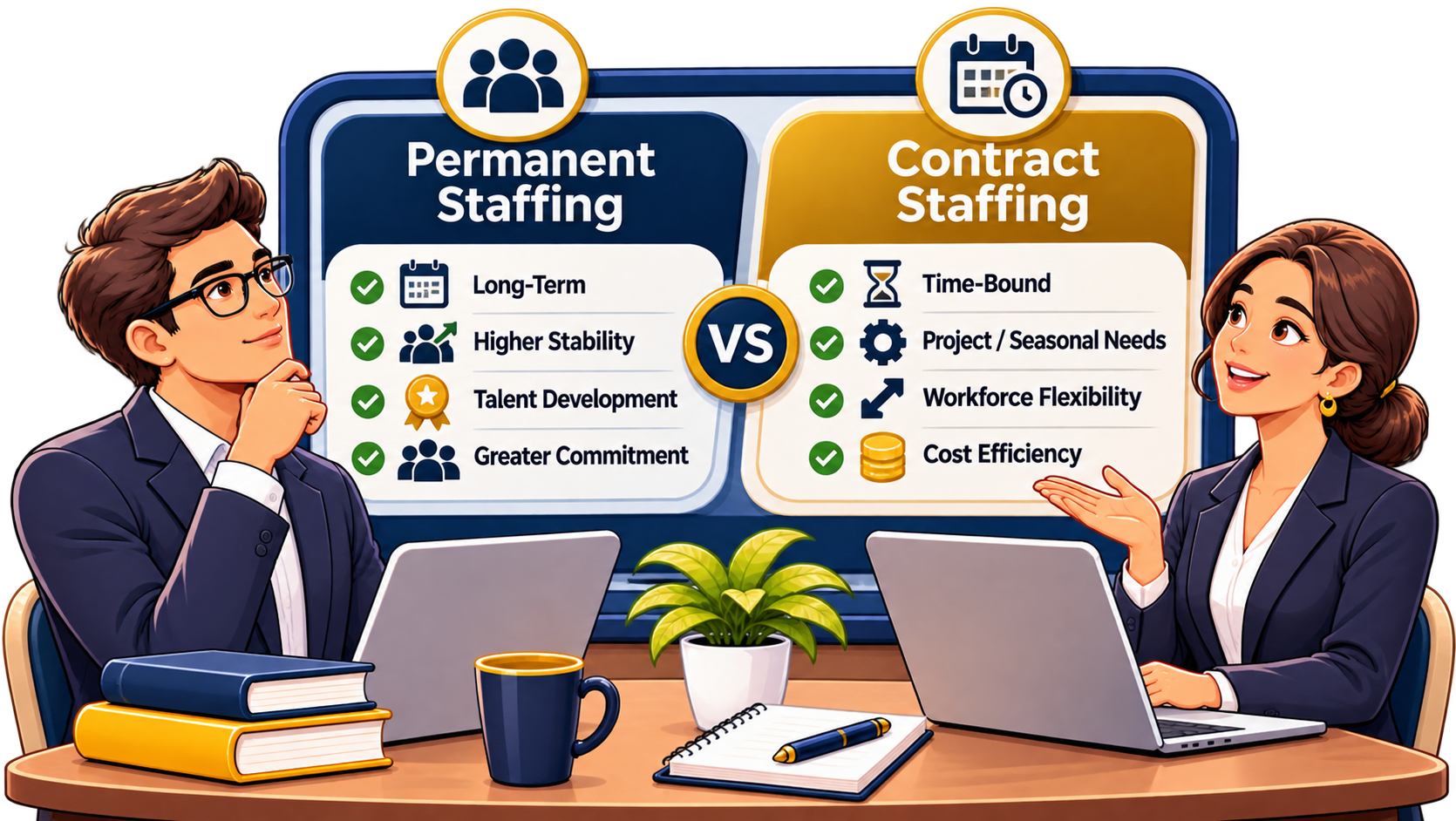
Understand the differences between ongoing employment needs and time-bound workforce requirements.
Permanent staffing
Permanent hiring is commonly used for ongoing roles that are part of the organization’s continuing capability. It can support long-term knowledge retention, continuity and career development. The employer should plan for the full employment lifecycle and applicable obligations.
Contract staffing
Contract staffing may suit time-bound projects, seasonal demand or defined capacity requirements. The agreement should clarify the work period, supervision model, deployment arrangements, responsibilities and applicable employment and compliance obligations.
Choose according to the work
Consider demand duration, required skills, continuity, control, cost, risk and the organization’s operating model. A short project does not automatically mean contract staffing is suitable, and a permanent role should not be disguised as a temporary need.
Review arrangements regularly
Monitor attendance, capability, service quality and workforce planning assumptions. Obtain appropriate professional advice when determining the legal structure of an engagement.
This article is general information, not legal, tax or professional advice. Requirements can vary by organization, location and current law. Verify applicable requirements with authoritative sources and qualified advisors before acting.